
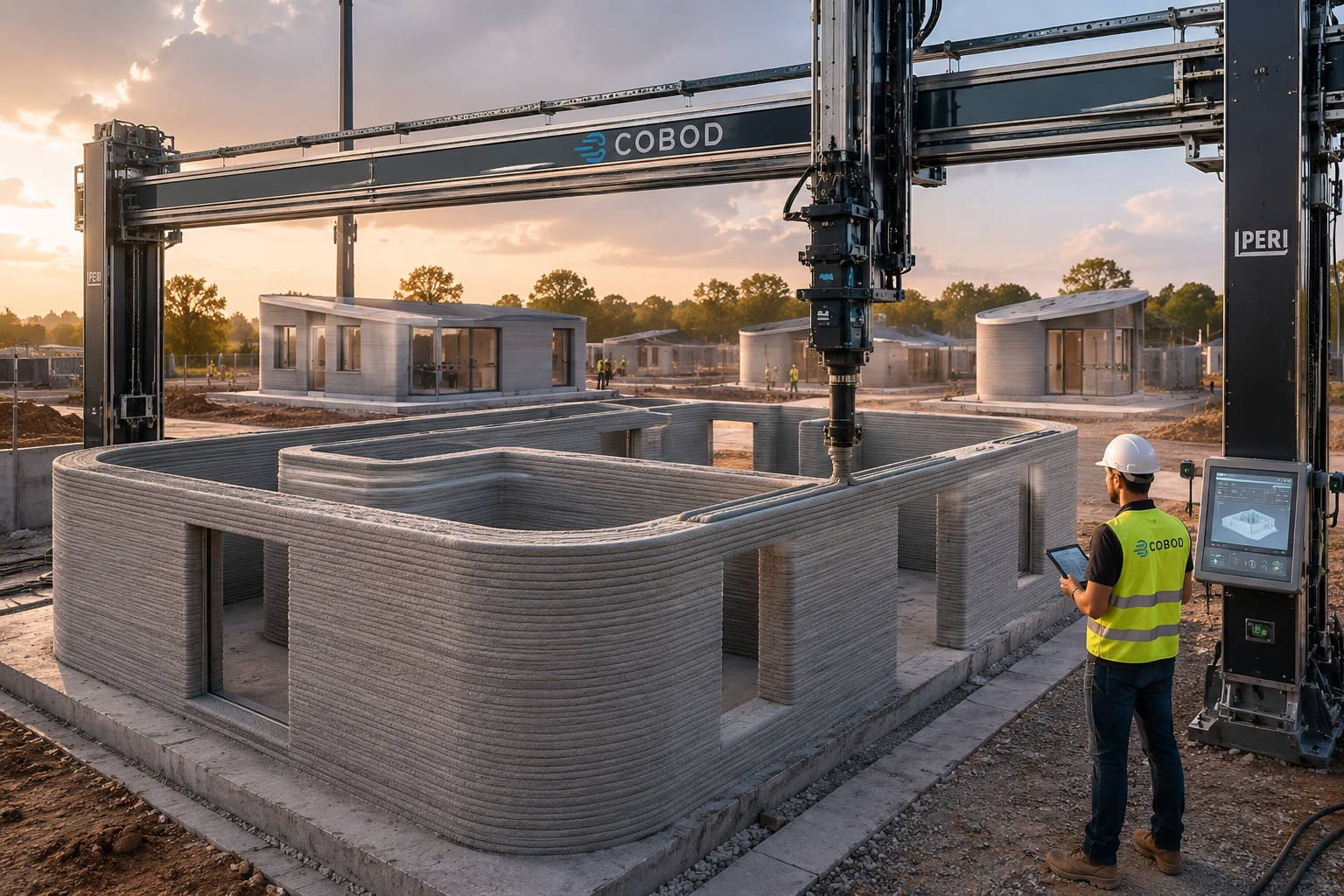
Latest Developments on 3D Printed Homes
The 3D printed housing industry is evolving from experimental prototypes into real-world neighborhoods, affordable housing projects, and even multi-story buildings.
The biggest trend right now:
Governments, developers, and investors are starting to treat 3D printed construction as a legitimate solution to the global housing crisis.
Biggest News Right Now
1. California’s First 3D-Printed Neighborhood Is Expanding
One of the biggest stories comes from Yuba County, California, where a company called 4DIFY completed homes using giant robotic concrete printers. The first house was reportedly completed in just 24 days and listed around $280,000 — significantly below local averages.
Key highlights:
- Faster build times
- Lower labor costs
- Fire-resistant concrete walls
- Reduced material waste
- Strong durability
This project is becoming one of the first real examples of:
Entire 3D-printed communities instead of isolated demo homes.
2. Cities Are Now Using 3D Printing for Affordable Housing
Major municipalities are increasingly experimenting with printed homes to address:
- homelessness
- labor shortages
- rising construction costs
- lack of affordable housing
A recent Forbes report highlighted projects in:
- Texas
- Colorado
- Tennessee
- Australia
including collaborations between cities, nonprofits, and construction-tech startups.
One important Colorado company:
Azure Printed Homes
Azure uses recycled plastic and fiberglass to create housing units and reportedly can complete projects within about 21 days.
3. ICON Continues Scaling Luxury + Mainstream Communities
ICON remains one of the most important companies in the sector.
Recent projects include:
- Austin housing developments
- Lakefront luxury communities
- Multi-home developments
- homelessness initiatives
ICON recently unveiled luxury lakefront printed homes near Austin at The Canyon Club development.
But more importantly:
ICON is also working on scalable affordable housing models.
This dual-market strategy is important because:
3D printing is moving beyond novelty and entering mainstream residential development.
Multi-Story 3D Printed Buildings Are Emerging
4. Japan Built Its First Approved Two-Story 3D Printed House
A major milestone:
Japan completed its first government-approved two-story 3D printed home capable of meeting strict seismic regulations.
This is huge because Japan has some of the toughest earthquake standards in the world.
The home features:
- hollow insulated walls
- reduced concrete usage
- faster construction
- integrated structural designs
This could open the door for:
- earthquake-resistant printed housing
- dense urban development
- faster rebuilding after disasters
5. Europe Is Moving Toward 3D Printed Apartment Buildings
France recently completed a three-story printed apartment building milestone project.
Even more interesting:
Developers now plan a 40-unit apartment project using multiple synchronized printers.
This suggests:
Construction-scale automation is starting to resemble factory production.
3D Printed Housing Is Becoming Faster
Recent projects globally now report:
- homes printed in under a week
- wall systems completed in days
- hybrid prefab + robotic construction
Countries aggressively experimenting include:
- United States
- Japan
- India
- Australia
- Canada
- France
Why This Matters
Labor Shortages
Construction industries globally face:
- aging workers
- fewer skilled tradespeople
- rising wages
Robotic printing reduces dependency on:
- large framing crews
- repetitive manual labor
- long build timelines
Housing Crisis
Many governments now see printed housing as a potential solution for:
- affordable housing shortages
- disaster relief
- rapid urban expansion
- homelessness programs
This is becoming a major policy trend.
Sustainability
3D printed construction also reduces:
- material waste
- transportation needs
- energy consumption
Some projects now use:
- recycled plastics
- eco-concrete
- lower-carbon materials
MIT researchers are even exploring printed structural systems made from recycled plastics instead of concrete.
Important Reality Check
Despite the hype:
3D printed housing still faces challenges.
Current limitations include:
- permitting/regulations
- financing
- insurance
- code compliance
- finishing labor still required
- scalability economics
And not every project succeeds.
A highly publicized Illinois 3D housing initiative recently stalled and reportedly drew an FBI investigation over financing and project execution issues.
So the industry is still in:
the early commercialization phase — not full mass adoption yet.
Biggest Industry Insight
The future likely isn’t:
“robots replacing all construction workers.”
Instead, it’s becoming:
Hybrid construction ecosystems combining robotics, prefab systems, AI design tools, and human finishing crews.
The real opportunity may be in:
- AI-driven architectural design
- decentralized construction networks
- automated print farms
- digital home templates
- sustainable materials
- smart-home integration
- tokenized real estate ecosystems
- local manufacturing hubs
This aligns strongly with trends happening across:
- AI
- robotics
- additive manufacturing
- decentralized infrastructure
- smart cities
Companies to Watch
Major Players
- ICON
- Azure Printed Homes
- SQ4D
- COBOD
- HiveASMBLD
What’s Coming Next
The next phase of the industry will likely focus on:
AI + Construction
- AI-generated home designs
- automated structural optimization
- autonomous project management
Printed Smart Cities
- modular communities
- infrastructure printing
- sustainable urban systems
Printed Commercial Buildings
- apartments
- hotels
- schools
- emergency shelters
Bioprinted Construction Materials
- living materials
- self-healing concrete
- sustainable bio-based composites
Most Important Takeaway
3D printed homes are no longer just tech demos.
The industry is now entering:
the “real deployment” phase.
The biggest question now is not:
“Can it work?”
But rather:
“Can it scale economically, legally, and operationally?”
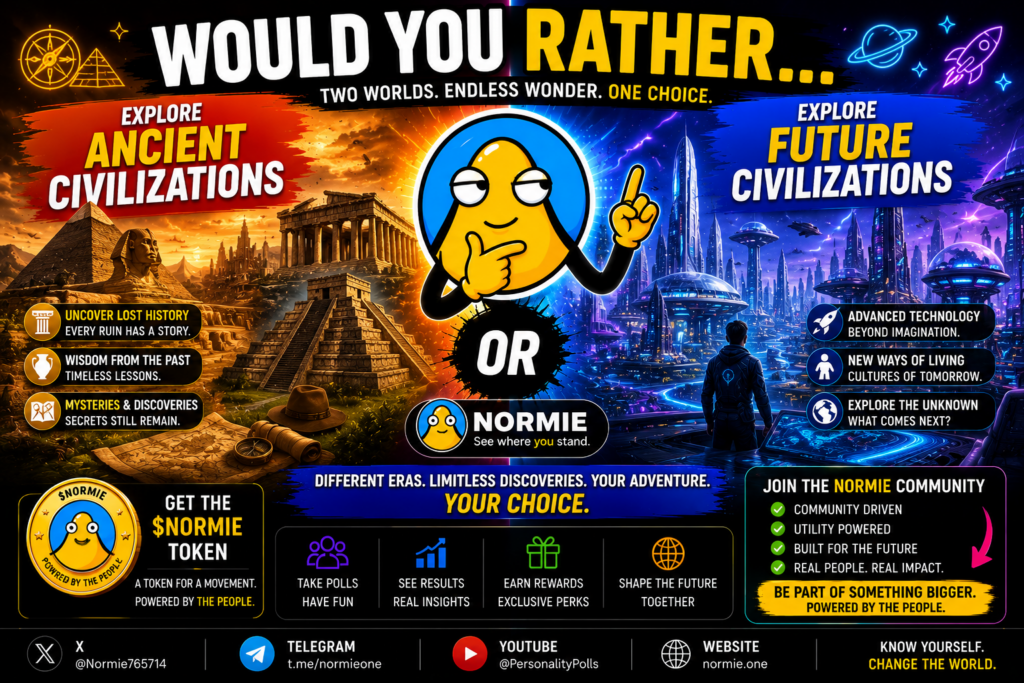
Welcome to NORMIE
The psychology-powered SocialFi platform exploring human behavior, personality, AI, memes, relationships, money, culture, and the future of humanity through viral “Would You Rather?” polls.
🧠 Vote on questions that reveal who people REALLY are.
📊 Explore collective intelligence and behavioral trends.
🤖 Discover how AI, psychology, and internet culture are merging.
🔥 Earn influence by participating in the conversation.
Would You Rather…
Explore Ancient Civilizations…
OR
Explore Future Civilizationsf?
Join the movement.
🌐 https://normie.one/
🐦 X: https://x.com/normie765714
📺 YouTube: https://www.youtube.com/@PersonalityPolls
💬 Telegram: https://t.me/normieone
Want to make this practical? Explore our startup resources or 3D Printing MBA.